G. Russell Case – Cloud, Mesa & Sage 30 x 40 inches
G. Russell Case
Western painter G. Russell Case is inspired by nature, but he places little value on literal translations. His sweeping, idealized versions of the western landscape are compositions that combine the beauty of the natural world with the rich imagination and originality of an artist’s mind. While there is an unmistakable honesty present in his painted environments — stemming from his engagement with the land painted directly from nature — viewers may be reminded of other great artists of the west, whose work is marked by distinctive artistic philosophies. Case’s work is unfettered by philosophy and intellect, though he is surely a student of his artistic forebears. The monumental scale of Maynard Dixon, or the unfiltered color and light of Thomas Moran both find their way into his visual language. Yet Case’s work is simple, pure, and fresh; his painting draws in the viewer and delivers timeless landscapes. We are immediately transported into a world created by shadow and light, of immense vistas punctuated by jagged mountains and inhabited by lonesome cowboys. Although Russell Case was undoubtedly stirred by the philosophies of the great artists and fueled by the freedom of painting from nature, this artist maintains that his most profound inspiration came from those in his own life who bolstered his career and remained faithful to his vision.
Born in the small town of Brigham City, Utah, Russell Case’s artistic enthusiasm was first fostered by his father, Gary Case, who was also an artist. His father encouraged Russell’s artistic talents and helped him seek exposure through marketing and local galleries. For fifteen years the younger Case translated his surroundings into watercolor, creating a foundation for the liquid vibrancy found in his later oils. This transition developed during his college years, where Case studied with the intent to become a professor of art. After graduating from Utah State University in 1990 and with the support of his wife, Susanne, Case decided to dedicate himself to painting full-time. It comes as little surprise that Case’s work eventually attracted the attention of collector Dr. Mike Edson and his wife Karen. Case credits Edson as being a major factor in his success due to his attentive monitoring of the young artist’s progress: his vigilant observation, unwavering support, and learned guidance helped develop Case’s talent and channel his artistic energy.
Case has also won numerous awards including Best of Show and First Place Oil Painting, Phippen Western Art Show in Prescott, Arizona in 2001; First Place at Southwest Magazine Artist to Watch Show in Steam Boat Springs, Colorado in 2002; and Best of Show, People’s Choice, and Artist’s Choice, Maynard Dixon Country, Mt. Carmel Junction, Utah in 2003. Among the shows that Case has been invited to in the last few years are the Western Visions show in Jackson, WY; Coors Western Art Exhibition, Denver, CO.; and Maynard Dixon Country, Mt. Carmel. Biography from Gerald Peters
Jo Mora- Evolution of the Cowboy for Levi Strauss, 2nd Printing Late 50s
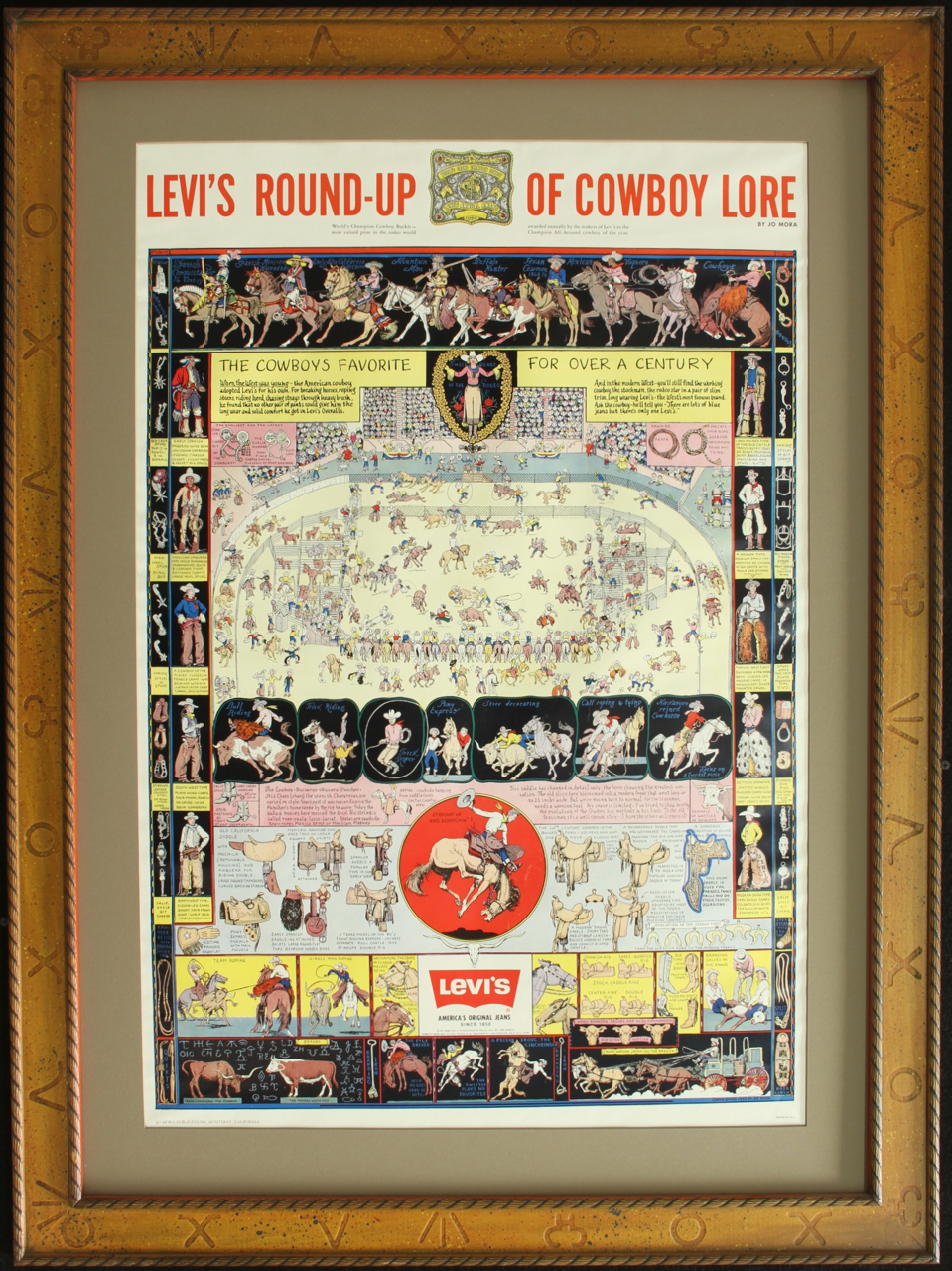
| Title: | Levi’s Round Up of Cowboy Lore |
| Artist: | Jo Mora |
| Medium: | Vintage Poster |
| Price: | $1,900.00 |
Jo Mora’s “Evolution of the Cowboy”. Levi Strauss reprinted the carte in various formats in the early 1950s, as a souvenir and a large calendar, both with a banner announcing the “Levi’s Round-up of Cowboy Lore” and adding an advertisement insert where the cowboys and chuckwagon were. Sometime in the late 1950s they reprinted the carte when they redesigned their Levis logo. They removed the “LEVIS” and used a new branding with Levi’s inside the symbol.
read moreErnst Haas Dye-tranfer print from “The Creation” 1982
| Title: | The Creation |
| Artist: | Ernst Haas |
| Medium: | Dye-tranfer 12.5 x 19.25 inches |
| Price: | $2,000.00 Framed |
Ernst Haas (March 2, 1921, Vienna – September 12, 1986, New York) was an Austrian artist and influential photographer noted for his innovations in color photography, experiments in abstract light and form, and as a member of the Magnum Photos agency
Photography career
Haas attended medical school in Austria, but, in 1947, left to become a staff photographer for the magazine Heute. His photo essay for the magazine on prisoners of war coming home to Vienna won him acclaim and an offer to join Magnum Photos from Robert Capa. Haas and Werner Bischof were the first photographers invited to join Magnum by the founders Capa, David “Chim” Seymour, Henri Cartier-Bresson, George Rodger and Bill Vandivert.
Haas moved to New York City and in 1953 produced a 24-page, color photo essay on the city for Life, which then commissioned similar photo spreads on Paris and Venice. In 1962, the Museum of Modern Art mounted a one-man show of Haas’ color photos. Haas’ first photo book, Elements, was published the next year.
Some of Haas’ most famous pictures were deliberately out-of-focus and blurred, creating strong visual effects. He used the dye transfer process to make many of his original prints, yielding richly saturated colours.
In 1964, film director John Huston hired Haas to direct the creation sequence for Huston’s 1964 film, The Bible. Haas continued working on the theme, producing the photo book, The Creation[1] in 1971. Other photography books by Haas included In America in 1975, a tribute to his adopted country for its bicentennial year; Deutschland in 1977; and Himalayan Pilgrimage in 1978. Other films that Haas worked on included The Misfits in 1961, Hello, Dolly! in 1969, Little Big Man in 1970, and Heaven’s Gate in 1980. Haas also photographed a number of advertising campaigns for Marlboro cigarettes.
In 1986, Haas received the Hasselblad Award for his photography. Haas died in New York City.
From Wikipedia
read moreStudy of Steers, Refuge Ranch, Utah 1921
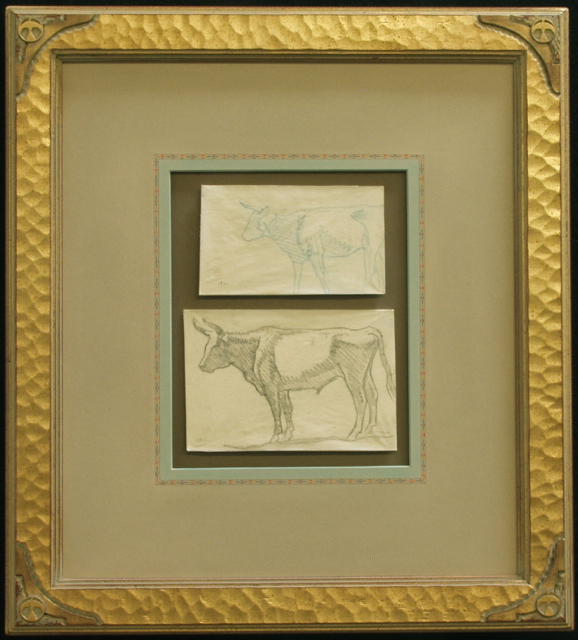
| Title: | Study of Steers, Refuge Ranch, Utah 1921 |
| Artist: | Maynard Dixon |
| Medium: | Drawing 3.25 x 5.5 inches and 4.25 x 6.25 inches |
| Price: | $8,000.00 |
Sedona Kid on Valentine-Greg Singley (30 x 24 inches) Oil on Canvas
| Title: | Sedona Kid on Valentine |
| Artist: | Greg Singley |
| Medium: | Oil on Canvas 30 x 24 inches |
| Price: | SOLD Framed |
read more
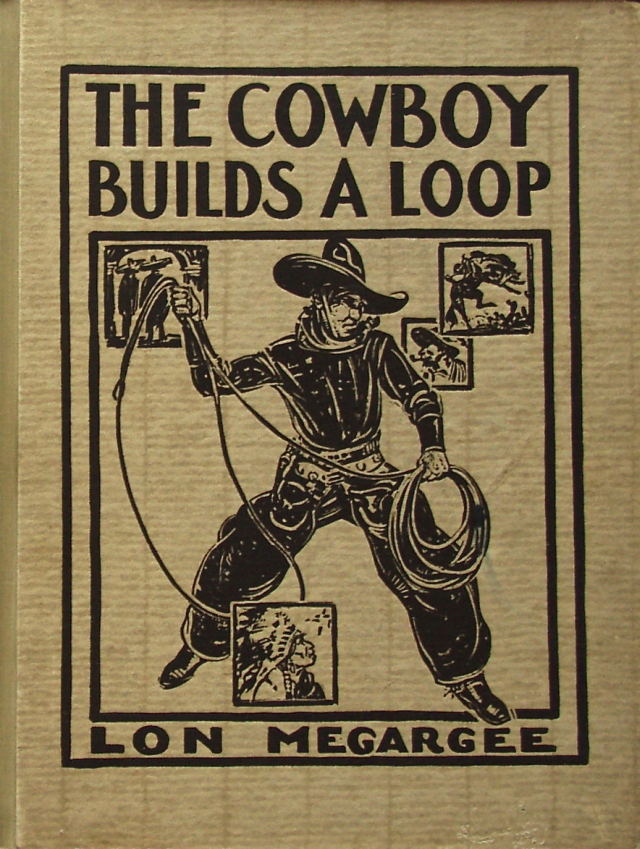
“The Cowboy Builds a Loop” 1933
| Title: | The Cowboy Builds a Loop |
| Artist: | Lon Megargee |
| Medium: | Handmade Book |
| Price: | Price on Request |
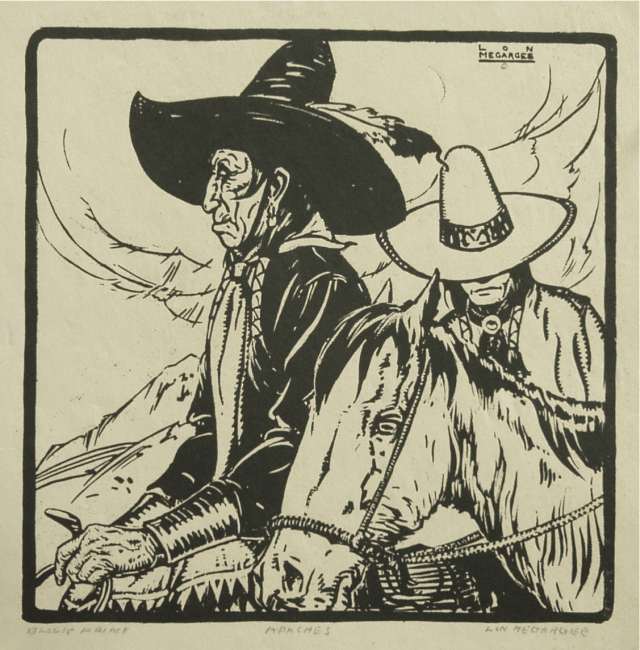
Apaches – Lon Megargee (10 x 10 inches) Price on Request
| Title: | Apaches |
| Artist: | Lon Megargee |
| Medium: | Block Print, 10 x 10 inches |
| Price: | Price on Request |
Psycho Killer – Bill Schenck (28.5 x 23) $3,700.00
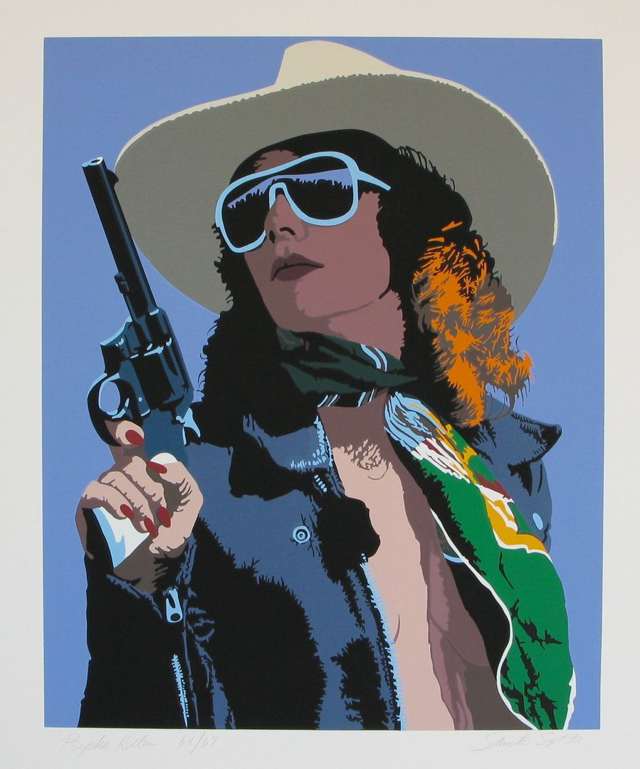
| Title: | Psycho Killer |
| Artist: | Bill Schenck |
| Medium: | Serigraph, 28.5 x 23 inches |
| Price: | $3700.00 |
No 5 – Bill Schenck – 1980 (27 x 29) $1,800
| Title: | No. 5 |
| Artist: | Bill Schenck |
| Medium: | Serigraph, 27 x 29 inches |
| Price: | $1800 |
Bill Schenck – The Serigraphs
The “cinematic” western serigraphs of contemporary artist Bill Schenck, exhibited by The Tucson Museum of Art. Produced for Tucson’12′s DTOWN.
read moreFrank Hoffman – Study for West of the Pecos 1931
| Title: | Study for West of the Pecos (1931) |
| Artist: | Frank Hoffman |
| Medium: | Mix media on paper, 14 x 11 inches |
| Price: | $950 |
Growing up in New Orleans where his father raced horses, Frank Hoffman developed a great love for these animals, which was reflected in his paintings. He worked as an illustrator for the “Chicago American” newspaper, which gave him an opportunity to draw many subjects from opera to prize fights, and eventually he became head of the department. During that time, he took formal art training from J. Wellington Reynolds, a portrait painter.
In 1916, having been rejected for military service because of poor eyesight, he went West and lived with cowboys and Indian tribes and served as public relations director for Glacier National Park. Eventually he settled on a ranch near Taos, New Mexico, and became part of that art colony and studied with Leon Gaspard, who encouraged him to use color freely.
Advertisers including General Motors, General Electric, and the Great Northern Railway hired him because they loved his bold, broad brush work and striking colors. He also did magazine illustrations, specializing in western subjects. Because of the spaciousness of his ranch that he called Hobby Horse Rancho, he kept live models of cow ponies, thoroughbred horses, longhorn steers, several breeds of dogs, eagles, a bear and burros.
From 1940 Brown & Bigelow Publishing Company of St. Paul, Minnesota had him under exclusive contract, and during the next 14 years, he produced 150 paintings for that company. Walt Reed, The Illustrator in America, 1860-2000
read moreBio of Kevin Irvin
Kevin Irvin
Biography
Kevin Irvin was born in Evansville, Indiana on July 13th, 1959. His parents, Bill and Nyda Irvin, owned a restaurant / bar called Billyʼs and then The Oaks and finally the Gemeca Inn. It goes without saying that Kevin grew up in the restaurant business and to this day he prefers to have dinner at the bar. His grandmother was the first person to encourage him in the arts. It was his grandfather however who exposed him to the wonder of tools and machines. A tool and die maker, his grandfather would busy himself with a variety of projects in his basement shop and allow Kevin to help by cutting out shapes on a scroll saw at age eight.
read moreHard to Ride – Lon Megargee (13 3/4 x 12 inches)
Hard to Ride – Lon Megargee (13 3/4 x 12 inches)
read moreLuis Jiménez – Southwest Pieta
| Title: | Southwest Pieta |
| Artist: | Luis Jiménez |
| Medium: | Stone Lithograph |
| Price: | Currently available on ebay – Please click here to go to auction. |
Additional works by Luis Jiménez are available. Please see the full gallery here.
read more